Once a driveway gate is automated, the next question most Surrey owners ask is whether they can run it from their phone. The short answer is yes, and the longer answer is that phone control is now the least of what a connected gate can do. A modern control board with an internet module can put the gate in an app on every household phone, tie it into a smart-home hub so it responds to the same routines that run the heating and the lights, open itself as your car arrives without any button at all, and answer to a voice assistant. Each of those is genuinely useful in the right household and pointless in the wrong one, and it is worth understanding what each actually delivers before specifying it.
It is also worth being clear-eyed about the trade-off, because a gate on the internet is a convenience and an exposure at the same time. The same connection that lets you open the entrance from the office lets a poorly secured system be reached by someone who should not reach it, and the entrance to your property is not the place to be careless about that. This walks through what phone, hub, and voice control each do in practice, and the security questions worth asking before you connect your gate to anything.
Phone Control, and the Geofencing Most People Miss
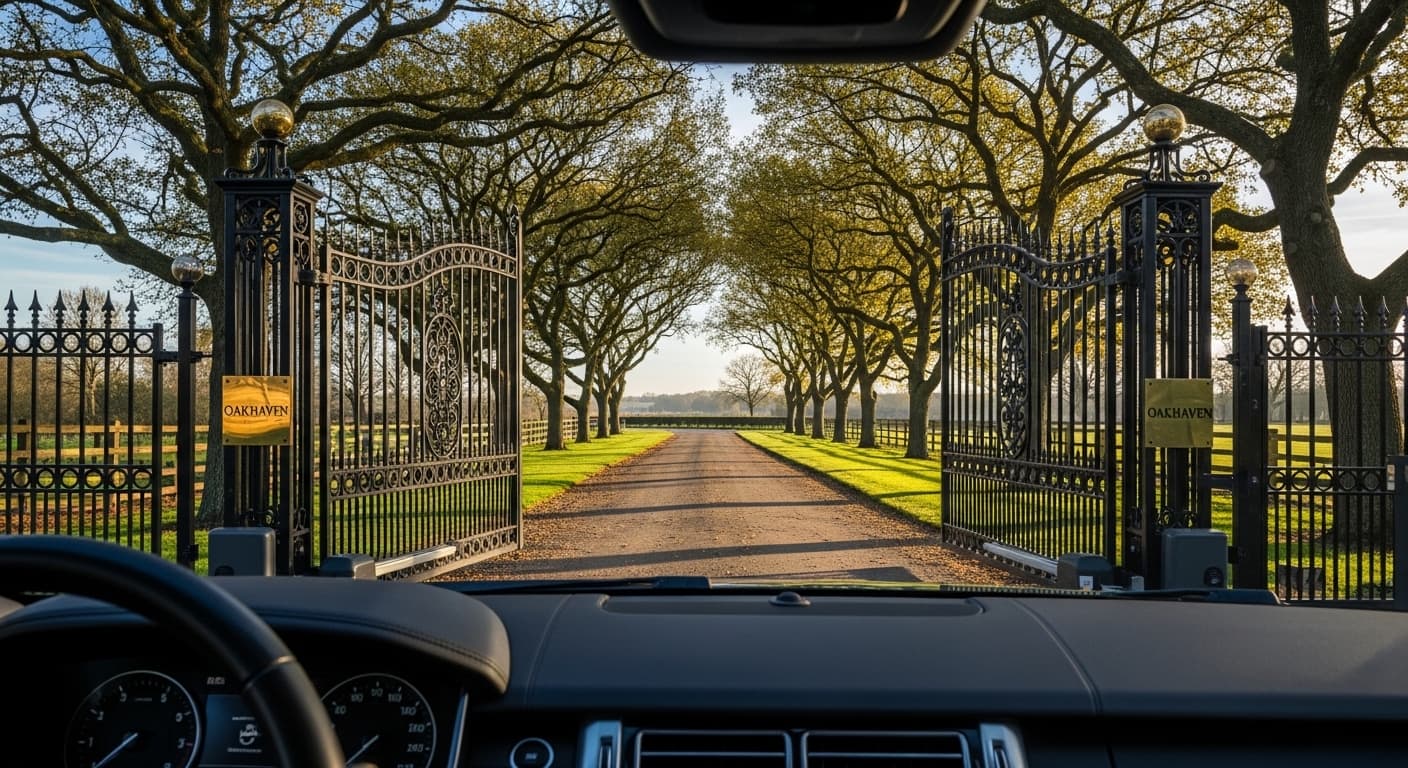
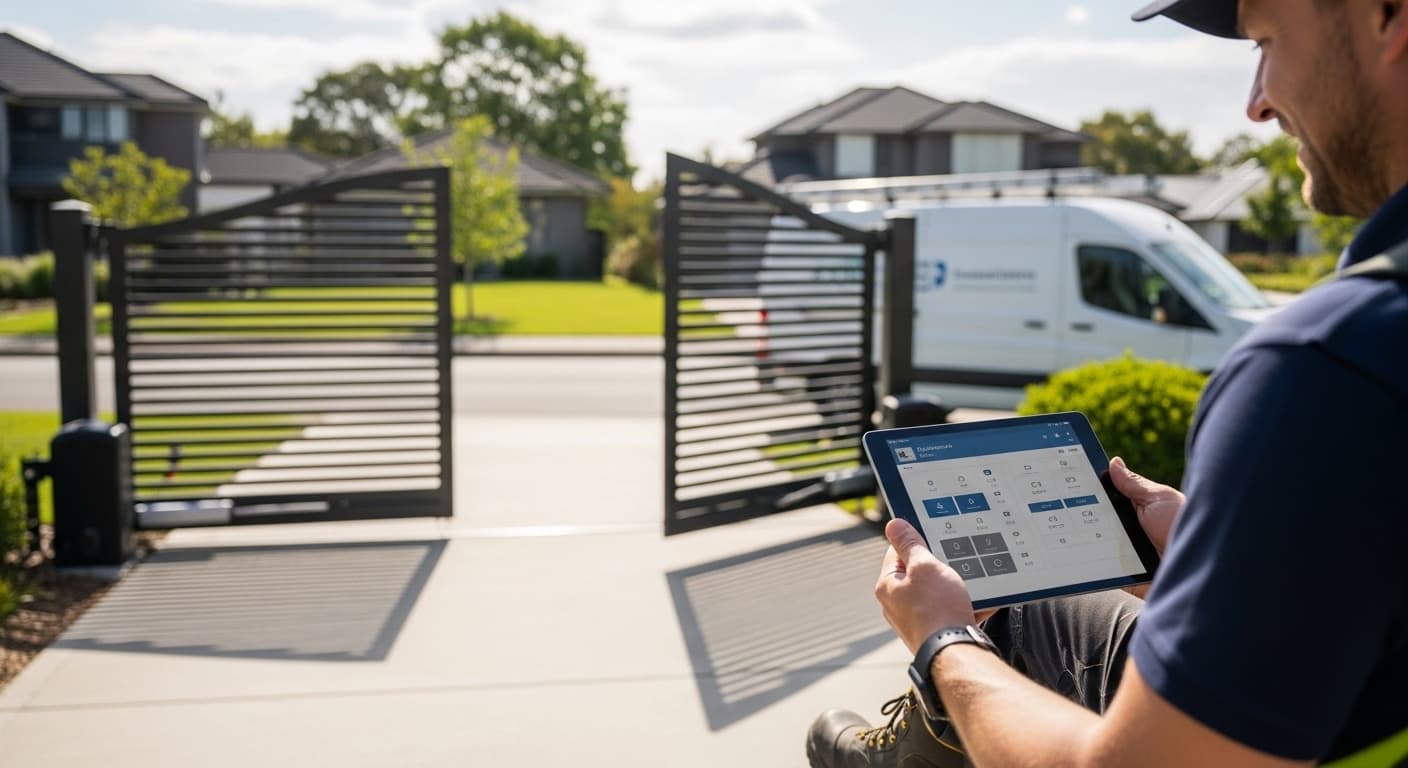
Basic phone control puts a button in an app: open the app, press the button, the gate moves. It works from anywhere with a signal, which is the point, and it means you can let a delivery driver or a family member in without being at the property. Useful, but on its own it is barely more convenient than a fob, because you still have to take the phone out and press something. The feature that changes the experience is geofencing, where the app uses your phone location to open the gate automatically as you drive into a set radius of home and, if you want, to close it again once you have left. Done well, this means the gate is open as you arrive and you never touch a control at all, which on a long drive is the effortless arrival that makes an expensive gate feel worth it.
Geofencing is not flawless and the limits are worth knowing before you rely on it. It depends on your phone reporting its location accurately, which can lag in poor signal or when the phone is trying to save battery, so it occasionally opens late or not at all and you fall back to the app or a fob. It also only knows about phones that have the app, so it does the household vehicles and nobody else. For that reason a connected gate is always specified alongside a conventional way in for visitors and for the times the clever route does not fire, exactly as with any access method. Treat geofencing as the excellent everyday route for your own vehicles, not as the only way the gate can ever open.
Ready for driveway gate quotes?
Three Surrey installers.
Free site surveys, detailed written quotes, no obligation. We match you with up to three specialists who cover your Surrey postcode.
Tying the Gate Into a Smart-Home Hub
Where a property already runs a smart-home ecosystem, the gate can become one more device in it rather than a standalone app. A gate exposed to a hub can be built into routines: a good-night routine that checks the gate is closed along with the doors, a morning routine that opens it at a set time on weekdays, or a scene that opens the gate and turns on the drive lighting together when you arrive after dark. The value here is not novelty but consolidation, because the gate stops being a separate thing to manage and becomes part of the single system the household already uses, controlled from the same screen as everything else.
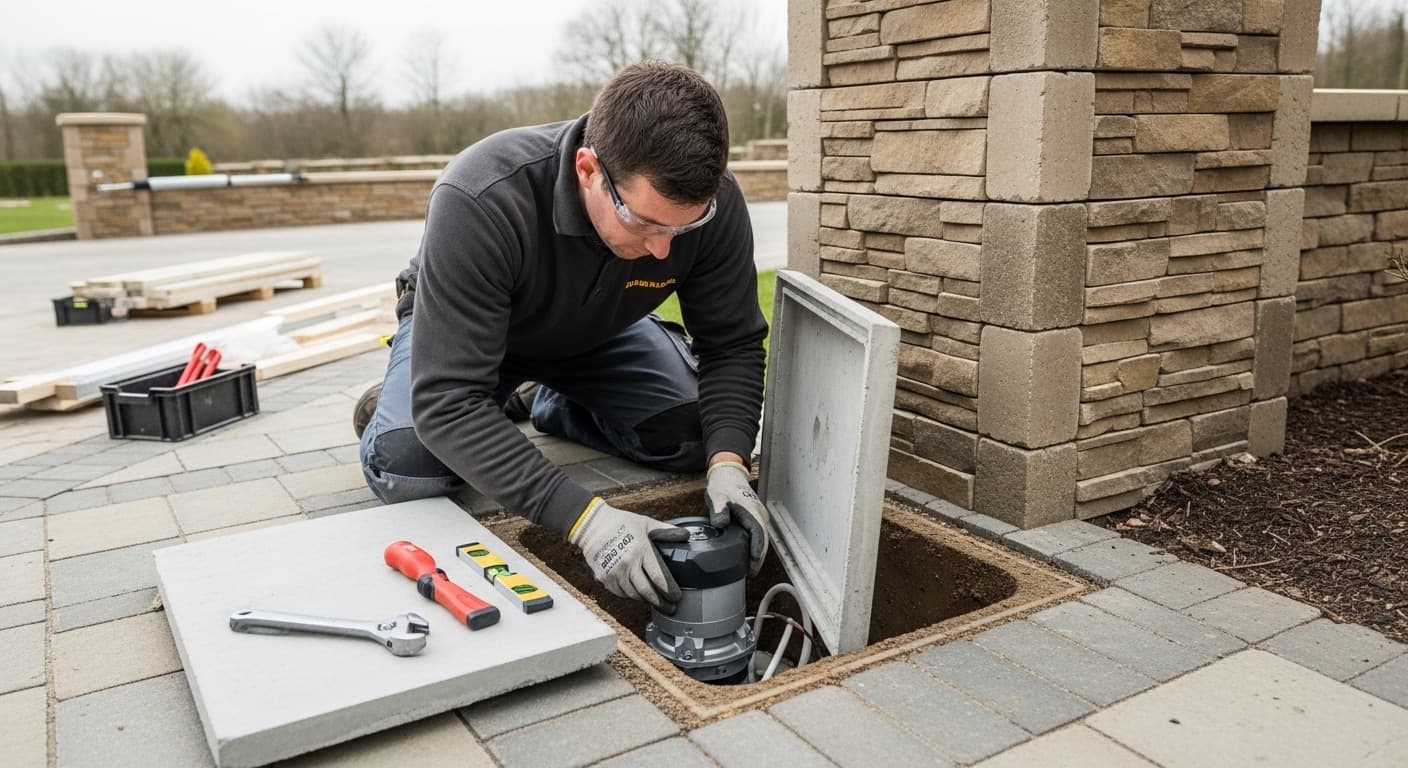
How cleanly this works depends on the control board and the hub. Some gate systems integrate directly with the mainstream smart-home platforms; others need a small bridge device to translate between the gate and the hub. This is a question to settle before installation rather than after, because retrofitting compatibility to a board that was never designed for it can mean changing the board. It sits alongside the wider point that a connected gate is only as reliable as its automation, and keeping that automation serviced is what keeps the clever features working, which is part of why an annual electric gate service in Surrey matters more on a connected system than on a plain fob-operated one.
Voice Control and Where It Belongs
Voice assistants can open a gate on a spoken command, and on the face of it that sounds like the height of convenience. In practice it is the feature to think hardest about, because a gate is a security barrier and a spoken command is not a secure credential. Most sensible setups either require a spoken PIN before a voice command will open the entrance, or restrict voice control to closing the gate and checking its status rather than opening it, precisely because you do not want the entrance to your property opening to any voice within earshot of a device near an open window. Used with that discipline, voice status checks and voice closing are genuinely handy; voice opening without a code is a convenience that quietly undermines the reason you fitted a gate.
The same judgement applies to how far you automate. Just because a gate can be tied into a dozen routines does not mean it should be, and the most robust connected installations tend to keep the automation focused: geofenced arrival, hub status, and scheduled closing, with the fancier possibilities left off. A connected gate is one part of a wider decision about the type of entrance that suits the drive, and the automation should follow the gate rather than drive it, which is worth bearing in mind when weighing up electric sliding against swing gates for a Surrey driveway in the first place.
The Security Question You Have to Answer
Putting the entrance to your property on the internet means the entrance is now only as secure as the weakest part of that connection, and this is the part of a connected gate that deserves real attention rather than a shrug. The basics are the same as for any connected device: a strong, unique password on the gate account and the hub rather than the factory default, two-factor authentication where the system offers it, and a control board and app kept up to date with the manufacturer's firmware and security patches. A gate running years-old firmware on a default password is an open door dressed up as a closed one. The NCSC guidance on using smart devices safely in the home sets out the sensible baseline, and it applies to a gate exactly as it applies to a camera or a smart lock.
Choosing well-supported kit matters as much as configuring it well. A gate control system from a manufacturer that still issues updates will be patched when a flaw is found; one from a maker that has abandoned the product will not, and a connected gate is a long-lived thing you do not want stranded on unsupported software. It is also worth remembering that a connected gate with a camera or app that can see beyond your boundary carries the same data protection responsibilities as any home camera, a point the consumer body sets out clearly in its guidance on whether a home security camera or video doorbell can break the law. Handle those two things properly and a connected gate is a real upgrade; skip them and it is a liability with a nice app.
Deciding How Connected Your Gate Should Be
- Phone app control suits any household that wants to admit visitors or deliveries remotely; geofencing adds the hands-free arrival on top
- Smart-home hub integration earns its place where the property already runs an ecosystem the gate can join
- Restrict voice control to status and closing, or require a spoken PIN to open, rather than allowing open-to-any-voice
- Always keep a conventional fob or keypad as the backup for visitors and for when the connected route does not fire
- Set a strong unique password and two-factor authentication, and keep the board and app firmware current
- Choose a control system from a manufacturer still issuing updates, since a connected gate is a long-lived install
A connected gate, set up with judgement, turns the entrance from something you operate into something that simply behaves the way the household expects: open as you arrive, closed and confirmed at night, part of the same system as everything else. Set up carelessly, it adds an app and an exposure without much real benefit. The dividing line is not the technology, which is mature and widely available, but the discipline applied to it, and on the connected installations worth having that discipline is designed in when the gate is automated and serviced rather than reached for after something goes wrong.