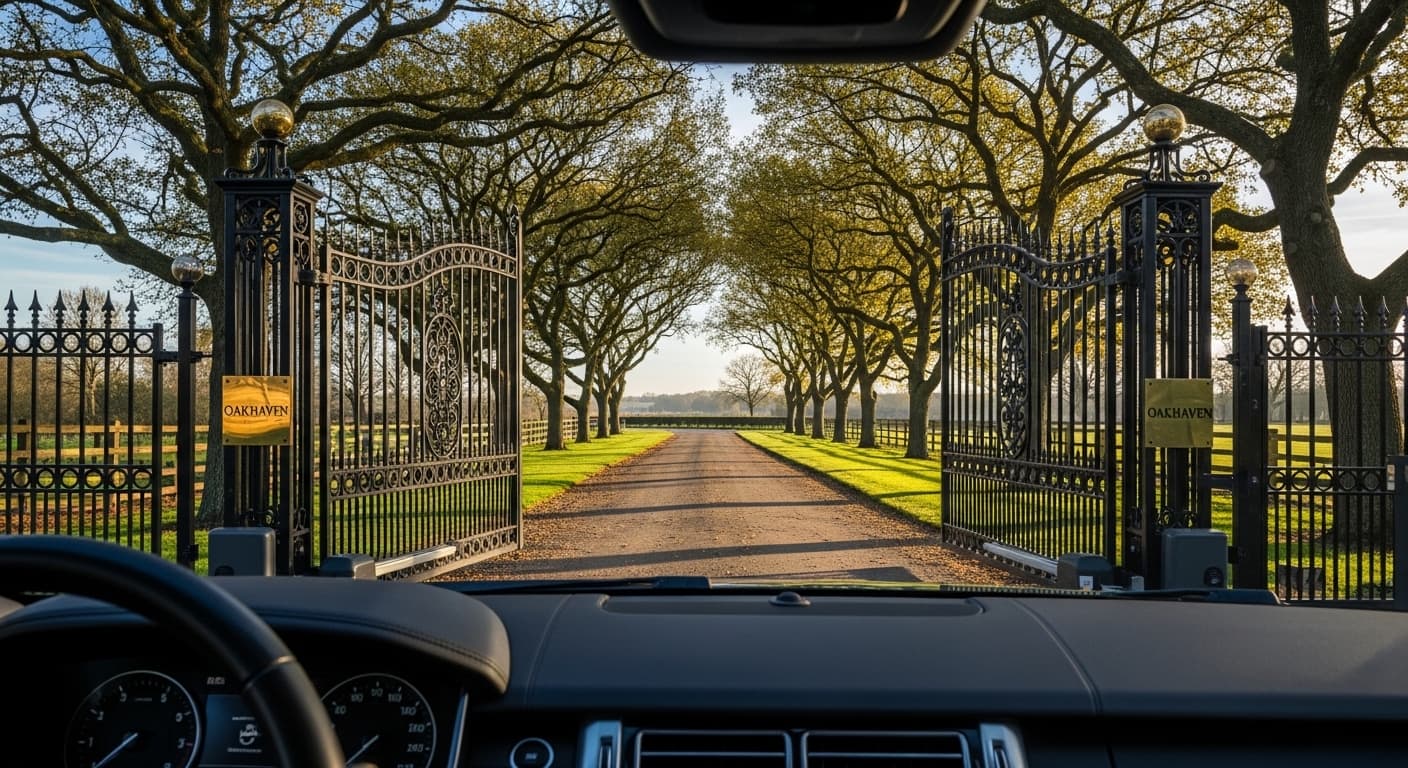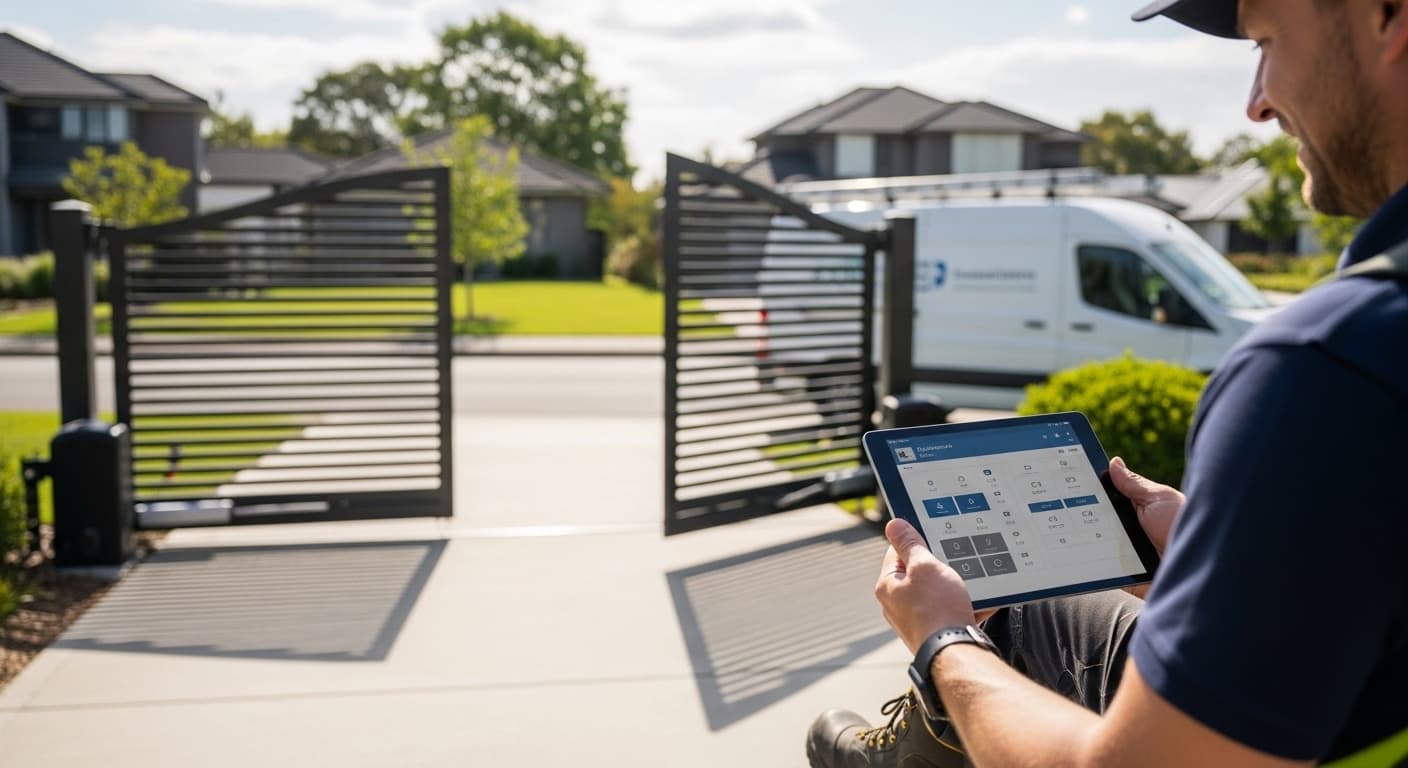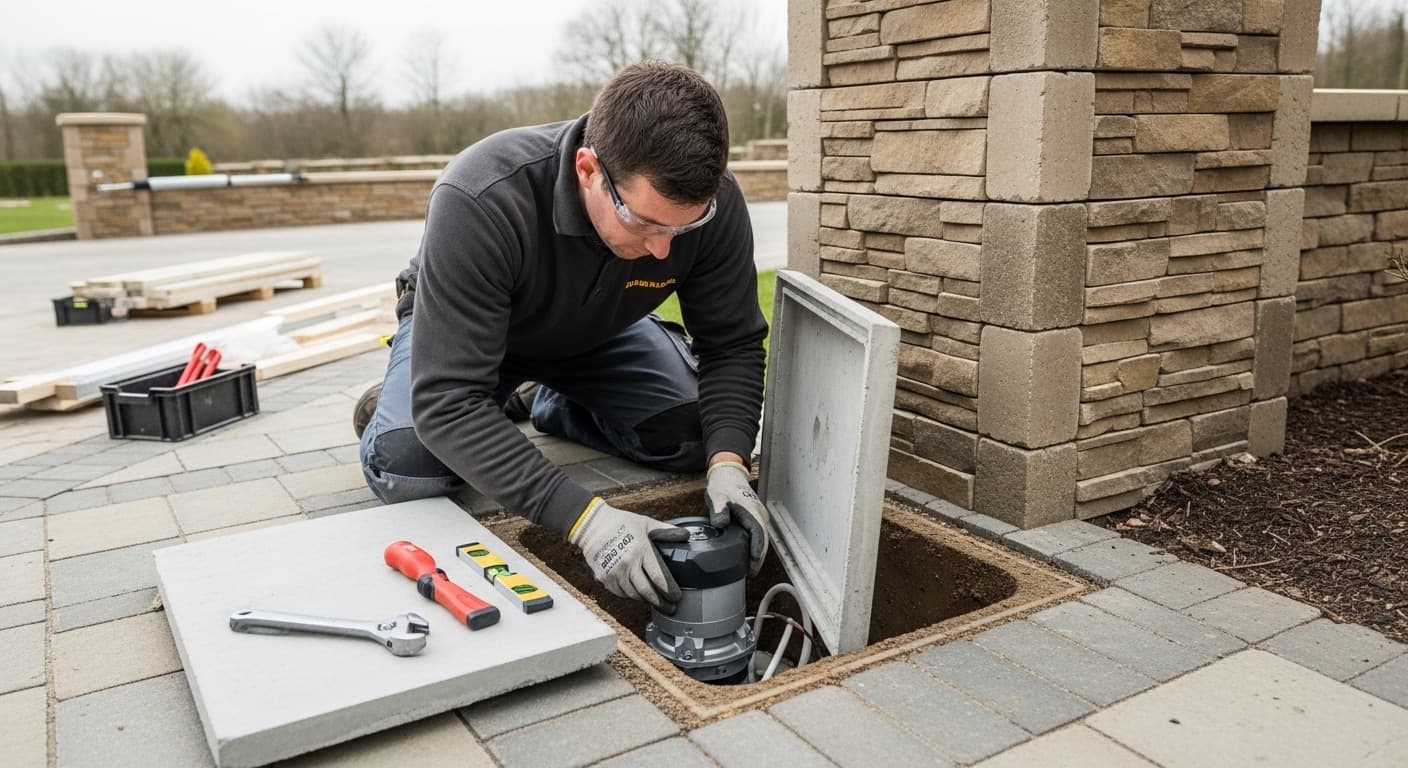
When an estate owner in Surrey asks which motor brand is best, the honest answer is that the question is slightly the wrong one. The motor is the part of an automated gate you never see and rarely think about until it stops, and on the heavy gates that Surrey produces in quantity it is also the part that decides whether the installation runs smoothly for a decade or becomes a recurring service call. A handful of Italian manufacturers dominate the serious end of the market, their products are broadly comparable in quality, and the difference between a good installation and a poor one is far more often the specification and the installer than the badge on the motor. That said, the names are worth knowing, because a quote that will not tell you which motor it is fitting is a quote to be wary of.
The brands that appear again and again on estate-grade Surrey installations are the established European specialists, and there are good reasons the serious installers keep coming back to them. This runs through who the main names are, what actually separates a suitable motor from an unsuitable one on a heavy gate, and how to read the part of a quote that names the automation, so that the motor question becomes something you can judge rather than something you have to take on trust.
The Names That Do the Serious Work
Three Italian manufacturers turn up on the majority of high-specification residential gate installations in the UK: FAAC, BFT, and CAME. All three make a full range of swing and sliding gate operators, underground and above-ground motors, and the control boards and accessories that go with them, and all three are engineered for continuous duty rather than the occasional light use a cheaper motor assumes. Alongside them, Nice is another large European maker widely fitted, and there are smaller specialists whose heavy-duty operators appear on the largest estate gates where the leaf weights climb beyond what a standard residential motor is rated for. What these makers share is a long track record, a proper spare-parts supply chain in the UK, and control boards that accept the intercom, keypad, and access-control add-ons an estate entrance is likely to want.
The practical consequence of choosing from this group is not that the gate opens any more smoothly on day one, because a cheap motor will do that too, but that the installation is serviceable and repairable for its whole life. A motor from an established brand can be maintained by any competent engineer, its parts can be sourced years later, and its control board can be reprogrammed or expanded rather than replaced. A no-name operator fitted to save a few hundred pounds can become unserviceable the moment the importer stops stocking it, at which point a fault means replacing the whole drive rather than a part. On an estate gate that is expected to last, that supportability is the real value of the brand, and it is worth far more than any marginal difference in the motors themselves.
Ready for driveway gate quotes?
Three Surrey installers.
Free site surveys, detailed written quotes, no obligation. We match you with up to three specialists who cover your Surrey postcode.
Why the Spec Beats the Badge
The thing that actually decides whether a motor is right for your gate is not the manufacturer but whether the operator is correctly matched to the gate, and this is where installations quietly go wrong. Every motor is rated for a maximum gate weight, width, and duty cycle, and a motor that is comfortably specified for a light suburban gate will struggle and wear out early on a heavy estate leaf that presents a real load in the wind. A serious installer sizes the motor with headroom above the gate weight so it can hold the leaf against a gust rather than merely move it on a calm day, and matches the operator type to the gate: an underground motor concealed for a heritage frontage, a ram operator for a standard swing, a rack-driven operator for a slider. The same brand offers all of these, so the brand alone tells you almost nothing until you know which model within the range has been specified and why.
Gate weight is the number that drives the whole decision, and it is set long before the motor is chosen, by the material and construction of the gate itself. A heavy welded steel or hardwood gate demands a stronger, higher-duty operator than a light aluminium one, so the motor specification cannot sensibly be separated from the gate specification. This is one reason the choice of gate material for a Surrey property and the automation should be considered together rather than in sequence, and it is why a quote that names a motor without reference to the weight it will be driving has skipped the step that actually matters. A properly specified motor for a heavy hardwood estate gate is a different beast from the one that suits a light framed gate, a point worth holding on to when reading about Iroko, oak, and Accoya driveway gates and their weight.
Standards, Compliance, and the Quote That Names a Motor
A gate operator sold for use in Great Britain is a regulated product, and the compliance side is a quiet mark of a serious brand and a serious installer alike. Powered gate operators placed on the GB market are expected to carry the appropriate conformity marking, and the mainstream manufacturers document that their products meet it, as the government sets out in its guidance on placing UKCA or CE marked products on the market in Great Britain. A budget operator from an unclear supply chain is exactly where that documentation goes missing, which is one more reason the established names are worth paying for on an entrance you intend to keep.
The installer's own standards matter as much as the motor's. A competent gate automation firm works to the recognised industry code of practice for powered gates, which treats the correct sizing of the motor and the safety of the installed system as inseparable, and the trade body publishes exactly this guidance for members and owners in its material on powered gate legislation and standards. When a quote names FAAC, BFT, or CAME and can also point to the class the gate is built to and the code it has been installed under, you are dealing with a specialist. When it names no motor, or names one but cannot say why that model suits your gate, you are dealing with someone bolting an operator onto a gate and hoping.
How to Judge the Motor on Your Quote
- Expect an established maker: FAAC, BFT, CAME, Nice, or a recognised heavy-duty specialist on the largest gates
- Check the operator is rated with headroom above your actual gate weight, not just above the minimum
- Confirm the motor type suits the gate: underground for heritage frontages, ram for swing, rack-driven for sliding
- Treat a quote that will not name the motor, or cannot justify the model, as a warning sign
- Look for the conformity marking on the operator and a maintainable UK parts supply behind the brand
- Ask which wind and safety class the installed system meets, not just which brand the motor carries
For an estate entrance the right frame is that you are buying a motor you can keep serviced and repaired for years, correctly sized for a gate that presents a real load, from an installer who can explain the choice, rather than buying a brand name for its own sake. The dominant European makers earn their place because they make that possible, but the decision that actually protects your installation is the specification behind the badge and the competence of the firm fitting it. On a heavy swing leaf in particular the operator should be sized and specified as an integral part of the electric swing gate installation rather than chosen afterwards to suit a gate already built.