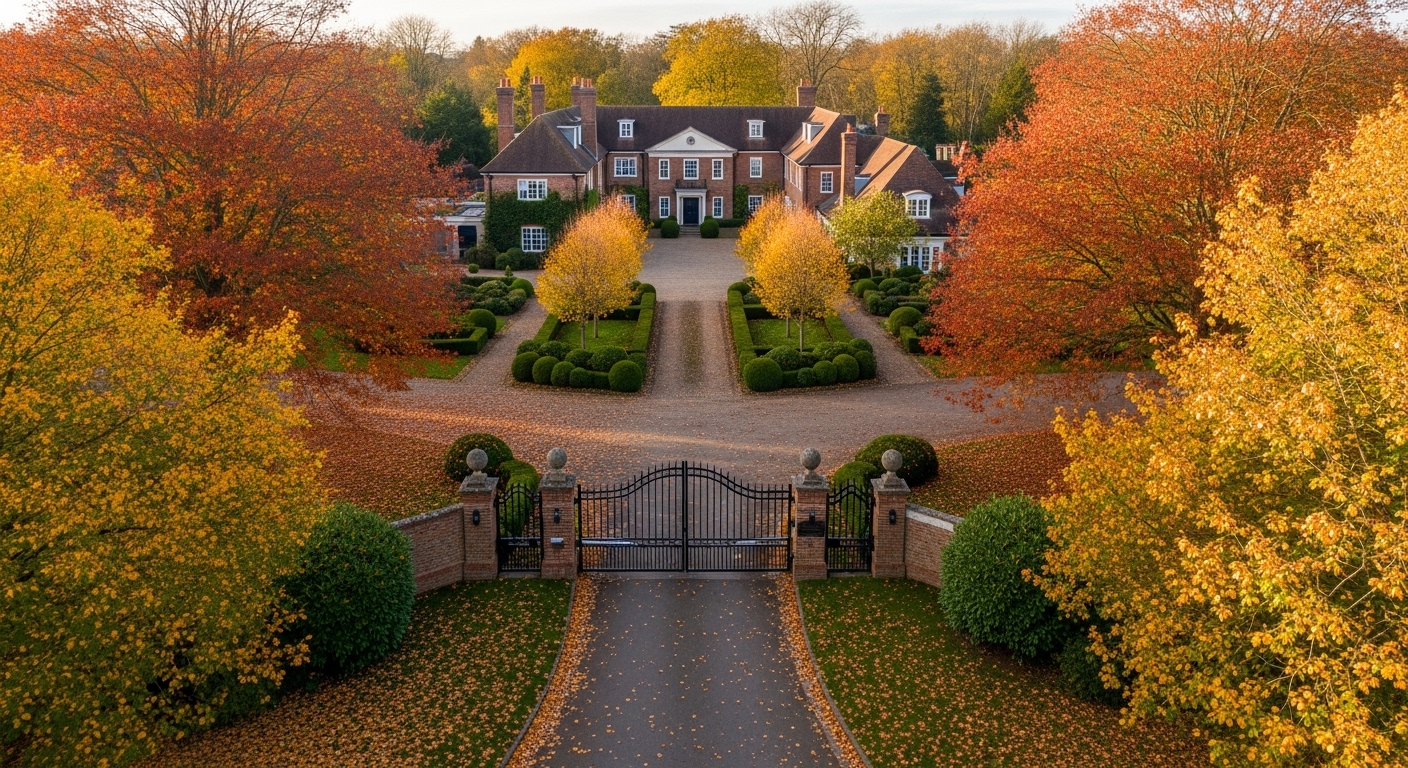
The entrance to a substantial Surrey residential property sets the expectation for everything beyond the gate. A well-proportioned gate entrance with appropriate pillar construction, gate scale, material specification, and approach creates a first impression that is consistent with the property it serves. A gate that is too small, too light in design, or out of character with the architecture reads as an afterthought, regardless of the quality of the house itself.
Surrey has a large stock of substantial residential properties across the county, from the Georgian and Victorian houses of the market towns to the Edwardian and Arts and Crafts country houses of the commuter belt, the stockbroker belt estate properties of Weybridge, Cobham, and Esher, and the rural farmhouses and barn conversions of the Surrey Hills. Each category has its own set of design references and its own appropriate scale of entrance treatment. This guide addresses the design principles that apply across all of them.
Pillar Specification: The Foundation of the Entrance Design
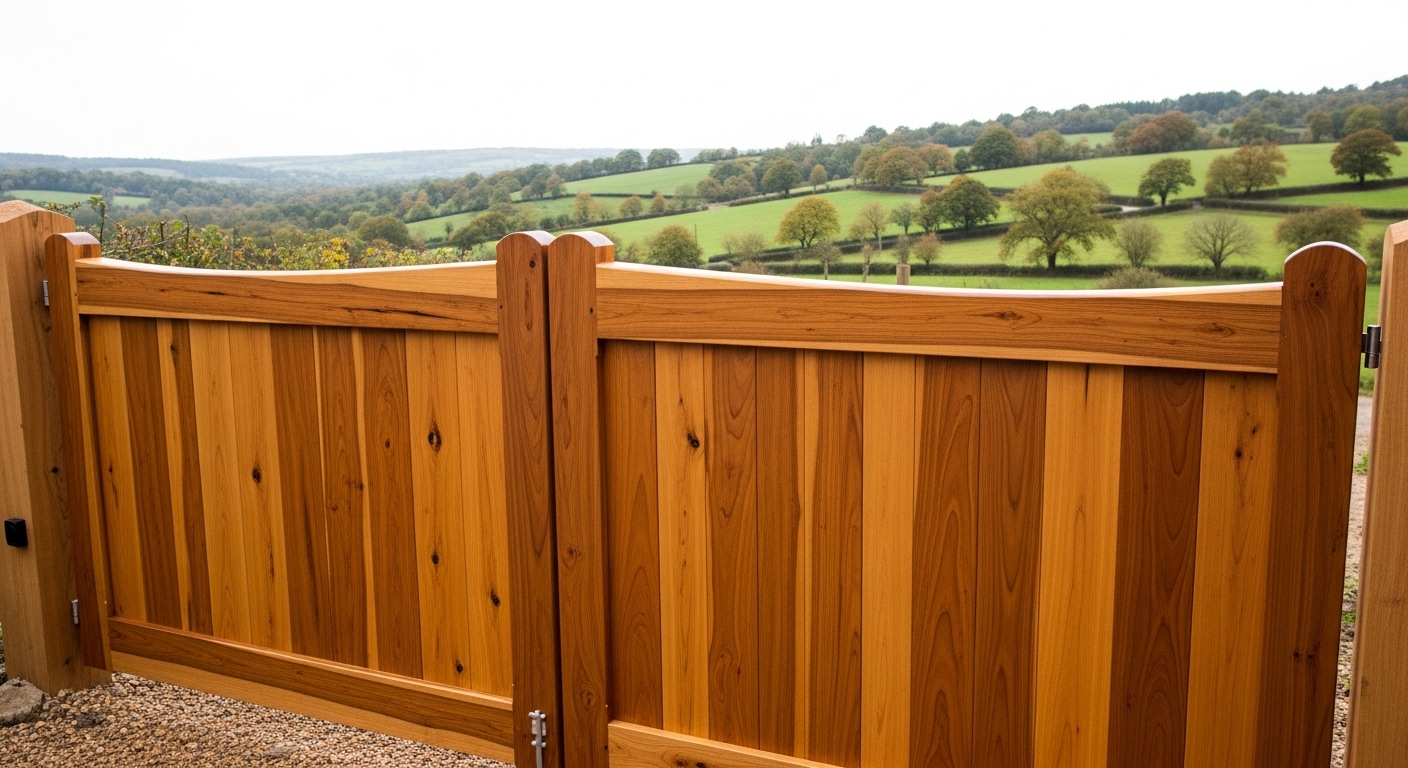
The gate pillars are the most permanent element of a gate entrance installation and carry more visual weight than the gate itself. The pillar material, proportion, and detail determine whether the entrance reads as substantial and considered or as a stock solution applied without reference to the property. Matching the pillar material to the house construction is the fundamental principle: red or yellow brick pillars for a brick house, stone or dressed block for a rendered or stone property, timber gate posts for a rural timber-frame context.
Pillar height should be proportionate to the gate height and the scale of the opening. A pair of 1.8 metre gates on pillars of 2.2 to 2.4 metres is a standard residential proportion. Estate-scale entrances with gates of 2 metres and above call for taller pillars, typically 2.6 to 3 metres, often with decorative caps, ball finials, or lanterns. The pillar footprint should be substantial enough to suggest permanence: a pillar that looks too narrow for the gate it supports creates visual instability that undermines the whole entrance.
Free Matching Service
Ready to get driveway gate quotes?
Get matched with vetted Surrey installers, no obligation and no cost.
Gate Scale and the Opening Width
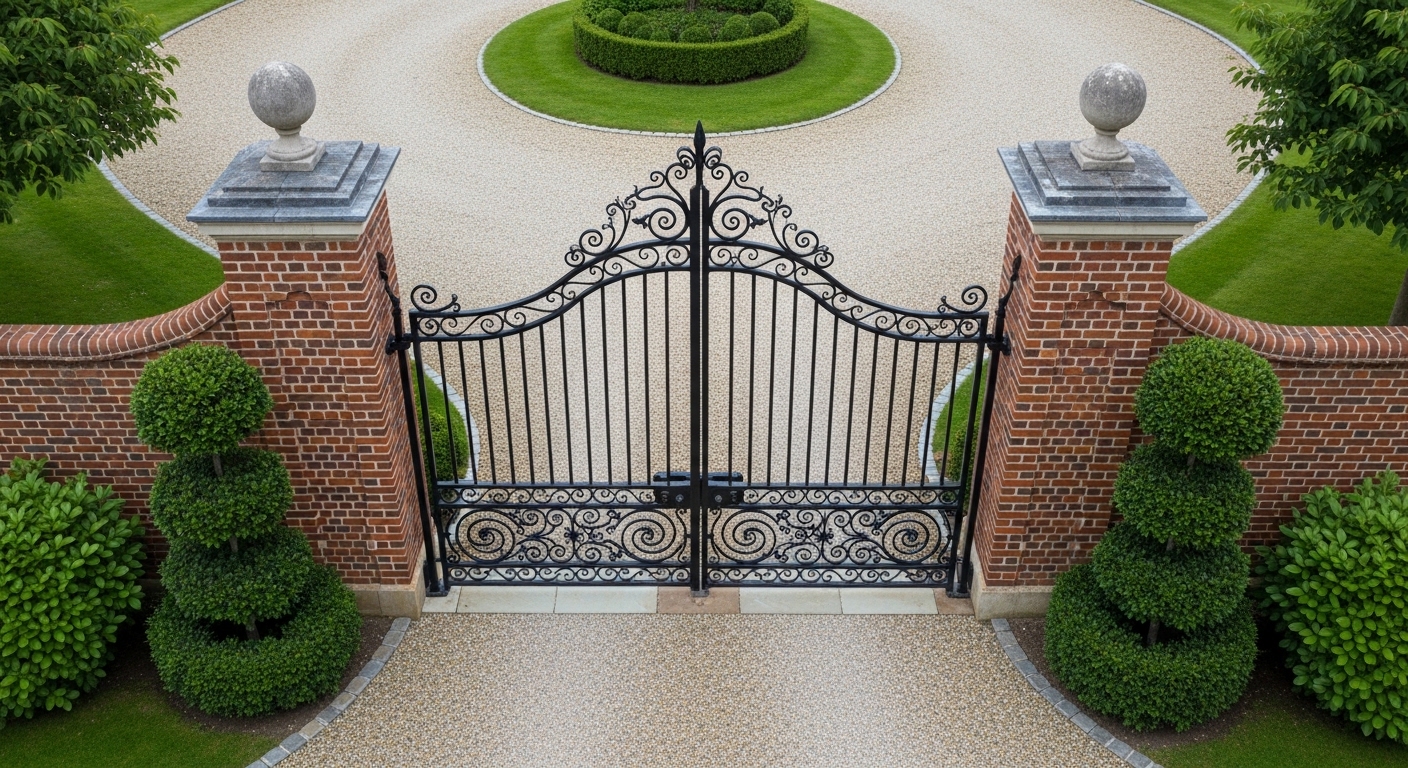
The gate width should be determined by the opening required rather than a standard size. A single vehicle requires an opening of approximately 3 metres minimum and 3.5 metres for comfortable passage without careful positioning. A double-width entrance allowing two vehicles to pass, or a single vehicle to enter without slowing, requires 5 to 6 metres. Estate entrances on Surrey properties with circular driveways or forecourts are commonly 5 to 7 metres wide with paired leaves.
Gate leaf proportions should produce a gate that is taller in relation to its width as the opening becomes larger. A 4 metre wide gate pair with 1.2 metre leaves will look squat and inadequate. The same opening with 1.8 metre leaves has significantly more visual presence. The gate fabricator will advise on proportions as part of the design consultation.
Approach and Driveway Layout
The gate entrance should be considered in the context of the driveway layout, not in isolation. The approach from the road needs to allow a vehicle to stop clear of the carriageway while waiting for the gate to open. For electric gates on Surrey properties close to the road, this usually requires a drop kerb and a short apron of hardstanding between the gate line and the road. The gate opening time should be factored into the stopping position: a gate that takes eight seconds to open requires the vehicle to be stationary for that period, which needs to be accommodated safely.
For circular or formal driveways, the gate entrance and the driveway layout should be designed together. A symmetrical entrance with matched pillar spacing, a centred gate, and a formal approach lined with topiary, box hedging, or parkland trees is a complete design statement. Landscaping firms and gate installers who work at the top of the Surrey residential market are accustomed to collaborating on these projects and can provide coordinated advice.
Lighting at the Gate Entrance
Pillar-mounted lanterns are the most traditional approach to gate entrance lighting on Surrey estate properties and suit wrought iron and formal gate designs particularly well. Contemporary properties more commonly use recessed uplighting at the base of pillars or low-level driveway lighting. Whatever the form, lighting at the gate entrance serves both security and aesthetic purposes: a well-lit entrance is safer, more welcoming, and shows the gate to better effect after dark.
Gate automation control boards can be programmed to trigger the entrance lighting when the gate opens, giving illuminated entry and exit without requiring the lights to be on permanently. This is a standard integration that any competent automation installer can set up.
Boundary Treatment and Context
The gate entrance reads as part of a wider boundary treatment. A pair of gates set into a continuous brick wall or stone boundary reads very differently from the same gates set between freestanding pillars with open ground either side. The boundary treatment should be considered at the design stage rather than added as an afterthought. Surrey's conservation areas and the AONB both have established boundary character that new gate installations should acknowledge: traditional flint walls in the Surrey Hills, red brick in the suburban areas, timber post and rail in the more rural settings.
Getting the Design Right
For substantial Surrey residential properties where the entrance is expected to be architecturally coherent with the house, the design process should begin with a proper site visit and design consultation rather than a quotation call. The best gate fabricators and installers in the Surrey premium market offer a design service as part of their engagement, producing drawings for approval before any fabrication begins. This is standard practice for estate-scale projects and is well worth requesting on any installation where the visual outcome matters as much as the technical specification.